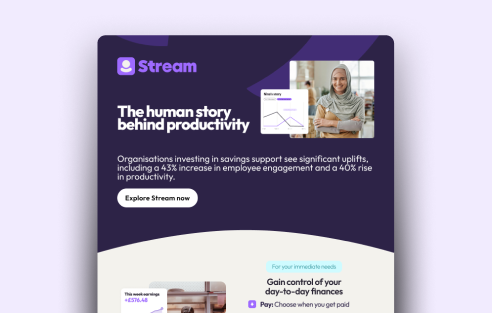
Finance based on a true story
Jan 2026 – Present
A multi-channel campaign reframing financial wellbeing as a measurable business performance driver.
|
Campaign · Messaging · Integrated marketing · Fintech · B2B · B2C
Campaign Design Lead
Stream (formerly Wagestream)
~£800k
Integrated campaign across events, OOH, paid & organic social, CRM, print, digital and embedded ads
Employers and business decision-makers
Role
Company
Budget
Scope
Audience
Financial wellbeing is often positioned as a short-term employee benefit rather than a long-term business strategy.
This campaign needed to reframe financial wellbeing as a measurable performance driver, while simultaneously speaking to two distinct audiences:
B2B employers seeking measurable impact
B2C employees seeking relatable, human financial support
The design and messaging needed to resonate emotionally with individuals while remaining commercially credible for decision-makers.
Challenge
I led visual direction and campaign rollout across all marketing channels, translating the strategic narrative into a cohesive multi-surface ecosystem.
This included developing design strategy for events, OOH placements, paid and organic social, CRM, print, digital and embedded advertising placements.
My Role
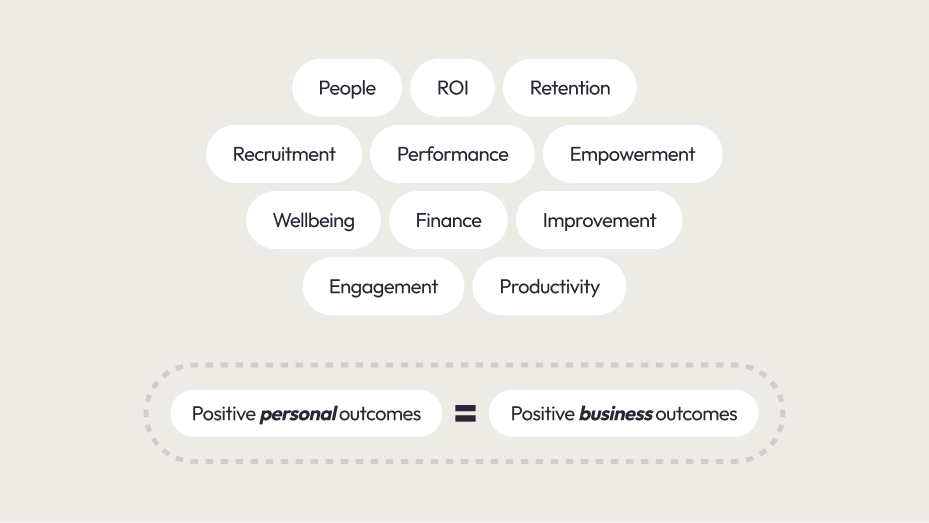
Positive personal outcomes = Positive business outcomes
Rather than focusing on product features, the narrative positioned financial wellbeing as a long-term strategic advantage. The tone balanced empathy with authority, ensuring the messaging felt grounded in real-world pressures while remaining commercially persuasive.
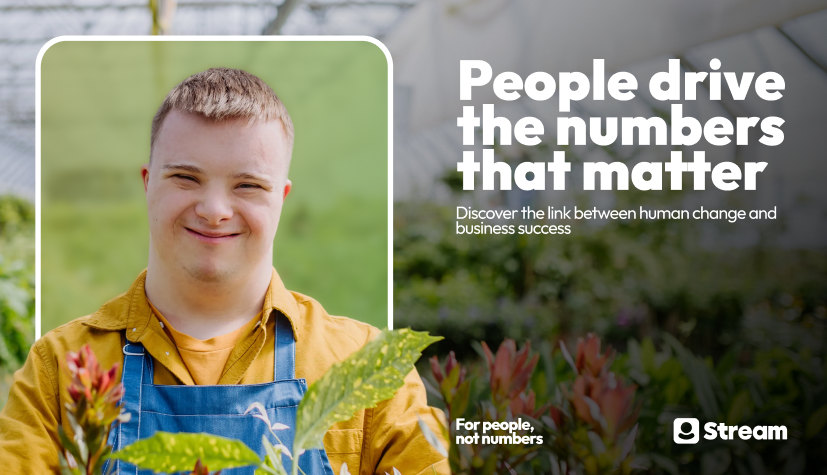
Visually, the work prioritised people and their personal relationships money rather than financial symbolism.
Approach
Implementation
Messaging-to-Design Methodology
Before production began, I defined a structured methodology for translating campaign copy into visual execution.
This framework mapped message hierarchy, audience intent and channel depth to ensure consistency while allowing tonal variation between B2B and B2C outputs.
Audience-Specific Translation
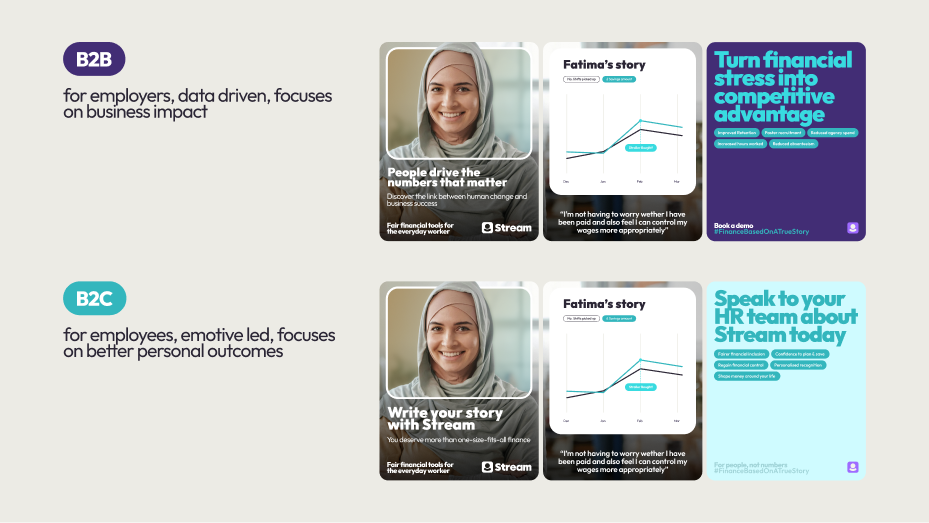
Because the campaign targeted both employers and employees, the design system intentionally shifted tone depending on audience context.
B2B (Employers)
Visuals emphasised measurable impact, structured hierarchy and data-led communication.
B2C (Employees)
Design leaned more emotive and human, prioritising relatable imagery and simplified messaging.
The central idea remained constant, but execution adapted based on audience context and format depth.
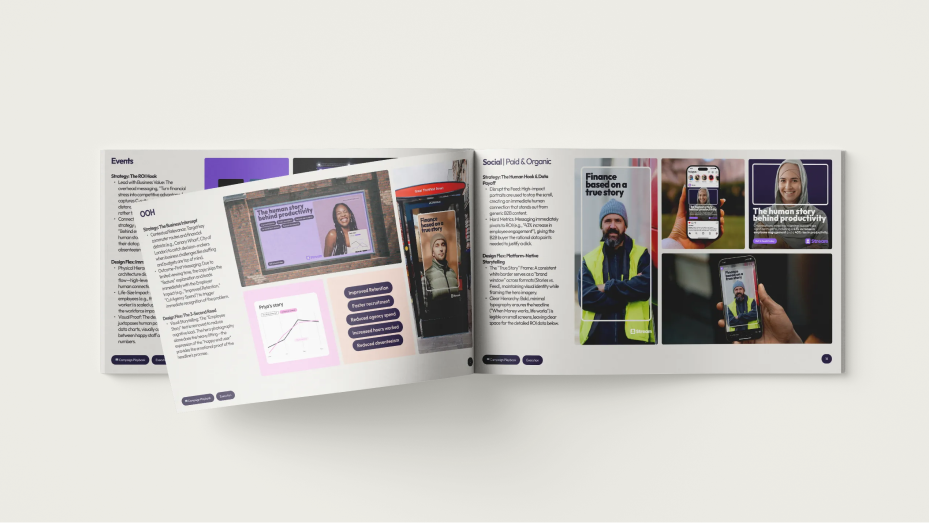
Campaign Playbook
To ensure consistency at scale, I created a structured campaign playbook used across marketing and design teams.
Rather than documenting isolated assets, the playbook defined:
Core campaign positioning and message hierarchy
Clear distinction between B2B and B2C communication
Visual system rules for typography, colour and imagery
Standards for presenting data and credibility signals
Channel-specific guidance across events, OOH, social, CRM and digital
It acted as a single source of truth, enabling teams to interpret and apply the campaign confidently without central design bottlenecks.
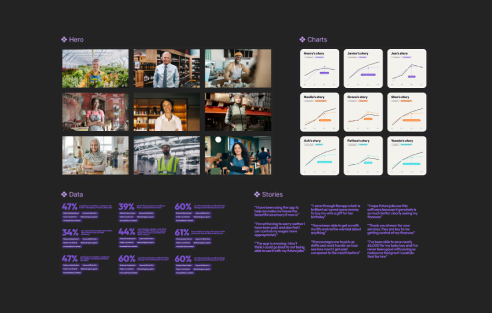
Modular Asset Ecosystem
Rather than producing isolated outputs, I built modular layouts and reusable components that aligned with the playbook structure.
This enabled, faster production, consistent hierarchy, scalable adaptation across formats and controlled variation between audiences.
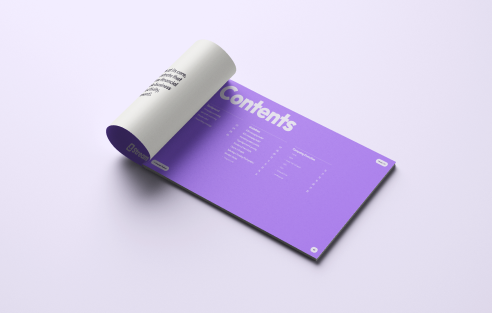
Governance & Delivery
With a large campaign budget and multi-channel rollout, governance was essential. The playbook acted as a single source of truth across teams, ensuring compliance, clarity and brand consistency throughout production.
Outcome
Beyond launch metrics, the campaign established a repeatable strategic framework for future employer-facing communication.